Wednesday, January 04, 2006

30 years - History repeats itself


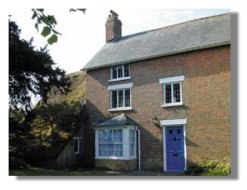
Coate Farmhouse and its out-buildings are in a very poor state at the moment. The Trust has lodged a formal complaint with Swindon Borough Council, the owners of the Grade II listed building, asking that restoration is undertaken now.

There was a similar appeal launched in 1975 by Sir John Betjeman. Mark Daniel's sketch of the farmhouse and outbuildings is illustrated above.

COATE FARM APPEAL 1975

An appeal by Sir John Betjeman with
Richard Adams
Ronald Blythe
Robert Dougall
Spike Milligan
Johnny Morris
Henry Williamson – Vice-president Richard Jefferies Society

Coate Farm, near Swindon, where writer Richard Jefferies was born and spent most of his short life, is in great danger through decay. Several thousand Pounds are needed urgently if the outbuildings are to be saved. This place is important for two reasons:

First, most of the remaining buildings have survived from before the middle of the last century, gaining importance from Jefferies’ descriptions of the farm, the countryside and its people during a period critical to English rural life;

Secondly, Jefferies’ work has been a source of inspiration to imaginative people for a hundred years and has profoundly affected modern country writing.

Parts of the farmhouse date from about 1700 but the outbuildings were constructed by Jefferies’ father, James, about 1840, largely with his own hands. At a time when agricultural depression was forcing many small dairy-farmers off the land, James hung on grimly – and built to last. Eventually he was ruined but his patience with young Richard, who preferred scribbling in notebooks to physical work, gave the world a great writer. The old buildings stand as a monument to a brave farmer and his son, whose vision helped inspire some of the best literature in the world.

It sometimes happens that Scheduled buildings are restored by some official body particularly if, like Coate Farm, they are actually owned by the local authority. However, the Council cannot now spend money on work to which it is not already committed – and the buildings cannot wait. Private support is the only hope.

I would be most grateful if you would help to save Coate Farm by sending a donation to: The Coate Farm Restoration Fund
c/o Mark Daniel etc

Tuesday, January 03, 2006

Western Daily Press

BATTLE OF THE LITERARY GIANTS (OR WAS ONE A PYGMY?)

3 January 2006

A Row over the merits of 19th century West Country literary giants Thomas Hardy and Richard Jefferies has gone all the way to Deputy Prime Minister John Prescott. It was sparked after Planning Inspector David Fenton's views on eminent Victorian nature writer Richard Jefferies enraged an appreciation group formed in his home town of Swindon.

The Richard Jefferies Society is fighting to prevent wildlife-rich countryside, known as Jefferies Land, from being destroyed by a £500million development on the edge of Swindon.

A university, offices and 1,800 homes are proposed for 500 acres of fields around the hamlet of Coate, an area objectors say was immortalized by the writings of Jefferies, who lived there. The society insists the area is part of Swindon's cultural heritage and as such should be preserved.

But after examining its objections, Mr Fenton felt the land could be developed. His report said: "To some people Jefferies and his works are an integral part of the literary landscape of Britain.

"However, it seems to me that he is not known or thought of in the same way as more major figures such as Hardy or Wordsworth." The society has now written to Mr Fenton's boss Mr Prescott, challenging his decision that Jefferies writings should have no bearing on the proposals.

The letter points out that Jefferies (18481887) was recently voted "by far the most frequently nominated author" when he came third in a national poll to find Britain's most popular nature writer.

This, the society notes, was higher than both Wordsworth and Hardy, whose works were also inspired by the West Country.

Jefferies society member Jean Saunders wrote: "We are dismayed to read the inspector's views related to the lack of weight he has afforded to the special quality of the literary landscape of land at Coate." She said Jefferies Land is a "most valued landscape" in terms of planning policy guidelines regarding the quality of life and the environment in rural areas.

THE letter goes on: "Given that Swindon has such a poor cultural image in Britain, when it has such an important and influential figurehead born and bred at Coate, we are at a loss to understand the inspector's point of view.

"We request that you might explore our concerns as we believe a major constraint to development has been summarily dismissed." To help guide Mr Prescott's deliberations, the society has sent him a copy of a new publication, Coate and Richard Jefferies by John Chandler. The Save Coate campaign has collected 26,000 signatures in its battle to protect Jefferies Land, which lies next to Coate Water Country Park.

In September, campaigners launched the Jefferies Land Conservation Trust which is seeking an alterative use for the rural site, situated near Junction 15 of the M4 and the Great Western Hospital.

The trust says the land should be preserved "for visitors to enjoy a special rural climate, and as a centre for study of the environment and historic landscapes". But the University of Bath in Swindon says it is the only viable site for its campus and denies campaigners' claims that it could be built in the town centre.

It has linked up with developers whose proposed 1,800 homes and commercial park will finance the infrastructure for the university, including sewers and roads. This Gateway scheme will also help fast-growing Swindon fill its Government housing quota for the next few years, says the council.

Richard Jefferies (1848-1887)
BEST known for his prolific and sensitive writing on natural history, village life and agriculture in late Victorian England, Jefferies' career also revealed a many-sided author who was something of an enigma.

Some associate him with the children's classic Bevis or the strange futuristic fantasy After London. But his finest work, including his autobiography The Story of my Heart, was inspired by the countryside around Coate, near Swindon, where he grew up and spent much of his life.

He is cited as an inspiration to a number of better known writers including John Fowles, who lived in Dorset, and A A 'Christopher Robin' Milne.

Thomas Hardy (1840-1928)
Poet and novelist born in Dorchester, Hardy created the literary region of Wessex, based in an around Dorset, where many of his stories are set.

His career as writer spanned more than 50 years, during which he wrote classic novels including Far From the Madding Crowd, Tess of the D'Urbervilles, The Mayor of Casterbridge and Jude The Obscure.

His novels bravely challenged many of the sexual and religious conventions of the Victorian age, and dared to present a bleak view of human nature.

In his poems, Hardy depicted rural life without sentimentality - his mood was often stoic and gloomy.

Saturday, December 03, 2005

Trust publish their vision for Jefferies Land at Coate and a history of the area

Jefferies Land Conservation Trust

PRESS RELEASE

3 December 2005

Trust publish their vision for Jefferies Land at Coate and a history of the area

The Jefferies Land Conservation Trust has published two pamphlets that provide a guide to the literary and historic interest in land at Coate and their vision for an alternative use of this special area.


The first pamphlet entitled Coate and Richard Jefferies was written by a local historian. John Chandler, who lives near Salisbury, examines the links between the Victorian author Richard Jefferies and the land where Jefferies was born and raised at Coate. The report discusses this area in the context of the life and career of Jefferies, its topography and character during the period of his acquaintance with it, and major references to the area in his works. It concludes with an assessment of Jefferies as a topographical writer, as formed by literary opinion since his death, and considers the importance of the Coate area in his works.

The second pamphlet An alternative use for Jefferies Land forms the basis of the Trust’s vision [1] for the area. It looks at the recent history and how the existing fields and buildings could be put to best use for the future economic, educational, social and environmental well-being of Swindon and its residents.

Jean Saunders, Secretary of the Trust said:

“We are delighted to make these pamphlets available to the public who might not be well acquainted with the special qualities of the area. At the same time, we want to ensure that the greatest assets are protected and enhanced in order that future generations of Swindonians can derive as much pleasure from them as their ancestors.”

The pamphlets can be obtained by sending postage stamps to the value of £1 to Pear Tree Cottage, Longcot, SN7 7SS. Copies can be picked up on Saturday 10th December at 1pm at the Community Crossroads, the former railway museum in Faringdon Road, where the Trust will be holding a special meeting.

For more information contact Jean Saunders on 01793 783040

-ENDS-

Editor’s notes
[1] The main elements of the Trust’s Vision are to:

§ maintain the landscape setting of Coate Water in the countryside; to preserve the adjoining Jefferies land as an ideal place for "rambles" to see the links to Jefferies' writing; and .... just simply a "place" to relax and enjoy.

§ enhance the biodiversity of the Site of Special Scientific Interest and the nature reserves at Coate Water, Day House Copse and Burderop Wood North. Extensive new habitats and wildlife corridors would be created, stressing the ecological value of streams, trees and hedges, etc.

§ provide a centre to study and appreciate literary landscapes as an inspiration to UK writers; the history of British nature writing; and to include a special focus on Richard Jefferies' key role in this evolution ;

§ demonstrate and study traditional crafts and environmentally sensitive alternatives that reduce man’s impact on the land, including managing land organically as an educational tool and for local food production;

§ feature the archaeological qualities of the area dating back about 3000 years and the links to others at Liddington Hill and Barbury Castle;

§ provide educational opportunities for local children linking in with local schools and community groups

Wednesday, November 30, 2005

Trust meeting 10 December

The Jefferies Land Conservation Trust is holding a special general meeting on Saturday 10th December at 1pm in order to formally adopt a Constitution and elect Trustees that will manage the organisation.

The meeting will be held at The Community Crossroads [the former Railway Museum] in Faringdon Road, Swindon.

There will be an opportunity to update Members about the Trust’s emerging vision for the land at Coate.

ADOPTION OF CONSTITUTION
This proposes rules by which the Trust will operate. They follow a model provided by the Charity Commission. The draft document also contains a mission and policy statement and describes briefly how the organisation is structured. Once the Constitution is agreed, the Trustees will apply to the Charity Commission in order to formally register the Trust as a Charity.

APPOINTMENT OF HONORARY OFFICERS AND TRUSTEES
Trust members will elect from amongst themselves a Chair, a Secretary and Treasurer and up to five additional trustees.

For more information contact Jean Saunders on jefferies_lct@tiscali.co.uk or phone 01793 783040


Friday, October 28, 2005

Just Before Winter


Just Before Winter
by Richard Jefferies [1886]

A rich tint of russet deepened on the forest top, and seemed to sink day by day deeper into the foliage like a stain; riper and riper it grew, as an apple colours. Broad acres these of the last crop, the crop of leaves; a thousand thousand quarters, the broad earth will be their barn. A warm red lies on the hill-side above the woods, as if the red dawn stayed there through the day; it is the heath and heather seeds; and higher still, a pale yellow fills the larches. The whole of the great hill glows with colour under the short hours of the October sun; and overhead, where the pine-cones hang, the sky is of the deepest azure. The conflagration of the woods burning luminously crowds into those short hours a brilliance the slow summer does not know.


The frosts and mists and battering rains that follow in quick succession after the equinox, the chill winds that creep about the fields, have ceased a little while, and there is a pleasant sound in the fir trees. Everything is not gone yet. In the lanes that lead down to the 'shaws' in the dells, the 'gills,' as these wooded depths are called, buckler ferns, green, fresh, and elegantly fashioned, remain under the shelter of the hazel-lined banks. From the tops of the ash wands, where the linnets so lately sang, coming up from the stubble, the darkened leaves have been blown, and their much-divided branches stand bare like outstretched fingers. Black-spotted sycamore leaves are down, but the moss grows thick and deeply green; and the trumpets of the lichen seem to be larger, now they are moist, than when they were dry under the summer heat. Here is herb Robert in flower--its leaves are scarlet; a leaf of St. John's-wort, too, has become scarlet; the bramble leaves are many shades of crimson; one plant of tormentil has turned yellow. Furze bushes, grown taller since the spring, bear a second bloom, but not perhaps so golden as the first. It is the true furze, and not the lesser gorse; it is covered with half-opened buds; and it is clear, if the short hours of sun would but lengthen, the whole gorse hedge would become aglow again. Our trees, too, that roll up their buds so tightly, like a dragoon's cloak, would open them again at Christmas; and the sticky horse-chestnut would send forth its long ears of leaves for New Year's Day. They would all come out in leaf again if we had but a little more sun; they are quite ready for a second summer.
Brown lie the acorns, yellow where they were fixed in their cups; two of these cups seem almost as large as the great acorns from abroad. A red dead-nettle, a mauve thistle, white and pink bramble flowers, a white strawberry, a little yellow tormentil, a broad yellow dandelion, narrow hawkweeds, and blue scabious, are all in flower in the lane. Others are scattered on the mounds and in the meads adjoining, where may be collected some heath still in bloom, prunella, hypericum, white yarrow, some heads of red clover, some beautiful buttercups, three bits of blue veronica, wild chamomile, tall yellowwood, pink centaury, succory, dock cress, daisies, fleabane, knapweed, and delicate blue harebells. Two York roses flower on the hedge: altogether, twenty-six flowers, a large bouquet for October 19, gathered, too, in a hilly country.
Besides these, note the broad hedge-parsley leaves, tunnelled by leaf-miners; bright masses of haws gleaming in the sun; scarlet hips; great brown cones fallen from the spruce firs; black heart-shaped bindweed leaves here, and buff bryony leaves yonder; green and scarlet berries of white bryony hanging thickly on bines from which the leaves have withered; and bunches of grass, half yellow and half green, along the mound. Now that the leaves have been brushed from the beech saplings you may see how the leading stem rises in a curious wavy line; some of the leaves lie at the foot, washed in white dew, that stays in the shade all day; the wetness of the dew makes the brownish red of the leaf show clear and bright. One leaf falls in the stillness of the air slowly, as if let down by a cord of gossamer gently, and not as a stone falls--fate delayed to the last. A moth adheres to a bough, his wings half open, like a short brown cloak flung over his shoulders. Pointed leaves, some drooping, some horizontal, some fluttering slightly, still stay on the tall willow wands, like bannerets on the knights' lances, much torn in the late battle of the winds. There is a shower from a clear sky under the trees in the forest; brown acorns rattling as they fall, and rich coloured Spanish chestnuts thumping the sward, and sometimes striking you as you pass under; they lie on the ground in pocketfuls. Specks of brilliant scarlet dot the grass like some bright berries blown from the bushes; but on stooping to pick them, they are found to be the heads of a fungus. Near by lies a black magpie's feather, spotted with round dots of white.........
The short hours shorten, and the leaf-crop is gathered to the great barn of the earth; the oaks alone, more tenacious, retain their leaves, that have now become a colour like new leather. It is too brown for buff--it is more like fresh harness. The berries are red on the holly bushes and holly trees that grow, whole copses of them, on the forest slopes--'the Great Rough;' the half-wild sheep have polished the stems of these holly trees till they shine, by rubbing their fleeces against them. The farmers have been drying their damp wheat in the oast-houses over charcoal fires, and wages are lowered, and men discharged. Vast loads of brambles and thorns, dead firs, useless hop-poles and hop-bines, and gorse are drawn together for the great bonfire on the green. The 5th of November bonfires are still vital institutions, and from the top of the hill you may see them burning in all directions, as if an enemy had set fire to the hamlets.


Deliberate decay?


Is Swindon Borough Council deliberately neglecting Coate Farm that houses the Richard Jefferies Museum?

It would appear to be so.

There is no apparent attempt made to look after the house and grounds let alone honour the home and name of this influential and well-respected writer.
With proposed major development on the doorstep, is Swindon Borough Council hoping to sell off the house and grounds for more?
Not over our dead bodies!

Monday, October 24, 2005

On the Downs

'The wind blows, and declares that the mind has capacity for more than has ever yet been brought to it. The wind is wide, and blows not only here, but along the whole range of hills - the hills are not broad enough for it; nor is the sea - it comes across the ocean and spreads itself whither it will. Though invisible, it is material, and yet it knows no limit. As the wind to the fixed boulder lying deep in the sward, so is the immaterial mind to the wind. There is capacity in it for more than has ever yet been placed before it. No system, no philosophy yet organized in logical sequence satisfies the inmost depth - fills and fully occupies the well of thought. Read the system and with the last word it is over - the mind passes on and requires more...


The Downs are lit with sunlight - the night will cover them presently - but the mind will sigh as eagerly for these things as in the glory of day. Sooner or later there will surely come an opening in the clouds, and a broad beam of light will descend. A new thought scarcely arrives in a thousand years, but the sweet wind is always here, providing breath for the physical man. Let hope and faith remain, like the air, always, so that the soul may live. That such a higher thought may come is the desire - the prayer which springs on viewing the blue hill line, the sea, the flower...

From the blue hill lines, from the dark copses on the ridges, the shadows in the combes, from the apple-sweet wind and rising grasses, from the leaf issuing out of the bud to question the sun - there comes from all of these an influence which forces the heart to lift itself in earnest and purest desire.
The soul knows itself, and would live its own life.'
Richard Jefferies, 'On the Downs', The Hills and the Vale


the music of water


'No one else seems to have seen the sparkle on the brook, or heard the music at the hatch, or to have felt back through the centuries... Perhaps after all I was mistaken, and there never was any such place or any such meadows, and I was never there.'

Richard Jefferies
'My Old Village', Field and Hedgerow

Monday, October 03, 2005

Power of nature


Richard Jefferies

Tom and I have returned from a holiday in Dorset where much pride of place is given to local writers. Thomas Hardy was undoubtedly influenced by Richard Jefferies. T E Lawrence's [Lawrence of Arabia] retreat at Clouds Hill had Jefferies' books displayed on the shelves. John Fowles has gone so far as to sign the Save Coate petition.
Literary Dorset is a real tourist attraction.
Influenced by the natural beauty around his Coate home, Richard Jefferies wrote in 'Wild Flowers':

"If we had never before looked upon the earth, but suddenly came to it man or woman grown, set down in the midst of a summer mead, would it not seem to us a radiant vision? The hues, the shapes, the song and life of birds, above all the sunlight, the breath of heaven, resting on it; the mind would be filled with its glory unable to grasp it, hardly believing that such things could be mere matter ... too beautiful to be long watched lest it should fade away."

Coate was very special then as it is to those of us now who see with Jefferies eyes. Let it be a literary attraction for tourists who want to marvel at the images that created such passionate prose.

Saturday, October 01, 2005

Jessie Baden's home

This is Day House farm. It is a Grade 2 listed building and the former home of Jessie Baden who married Richard Jefferies.
It seems to be Mark's home in 'Bevis' and his 'prison' when he is not allowed to go out and play with his friends.